Terra Vitae has had animals for a while. Now it has critters too: the small life that fills a world in around them. The first two are a bee and a pair of fish.
The Florabee
Hang a hive somewhere and it starts with six bees and a little honey. By day the bees go out to whatever flowers are in bloom nearby. A bee lands on a flower for a few seconds, moves on to the next, and after a few heads home with pollen on its legs. Every load it brings home becomes honey.
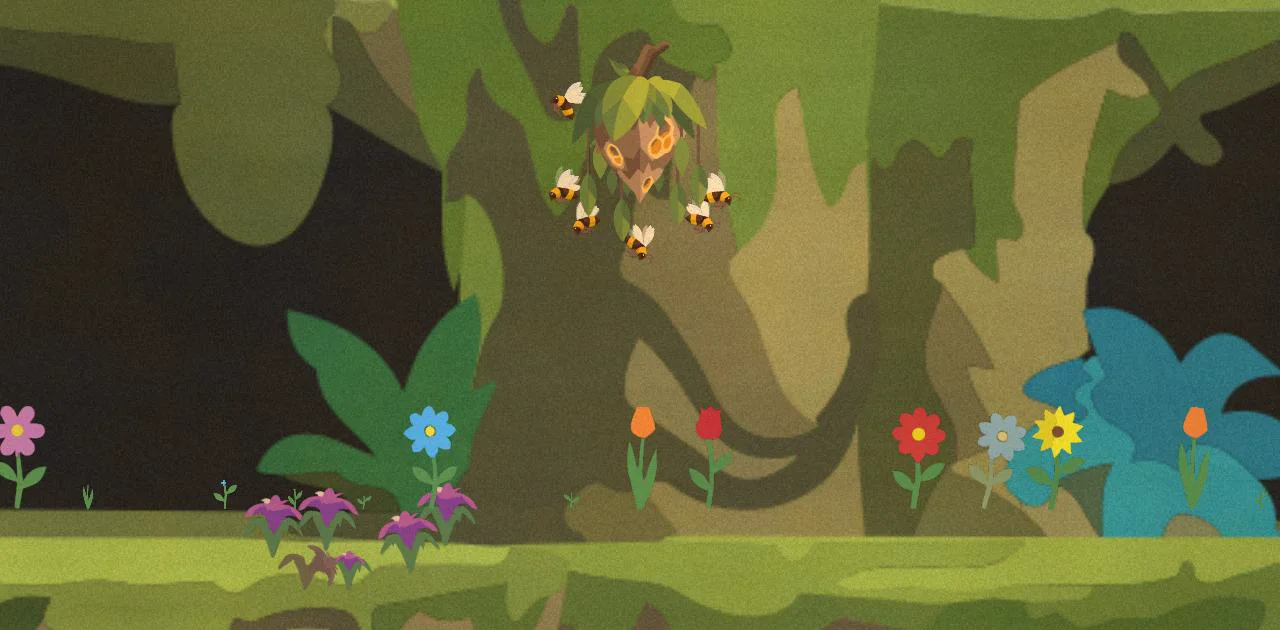 Work in progress · in-game
The bees live on that honey. While there’s plenty, the hive raises new bees, up to a dozen. If the honey runs out, they start to die off one by one, the oldest first. A hive that stays full for long enough raises a queen, and she flies off with a few bees to start a hive of her own somewhere else in the jungle.
They keep to the day. They come out from six in the morning, start heading home at six in the evening, and are all inside by half past seven. They won’t go out when it’s too cold or too hot, and they never fly into water or lava.
Leave them be and they’ll leave you be. A bored animal that snaps at a bee gets stung, runs off, and leaves the bees alone for a while after. An animal that grabs the hive itself has every bee in it to deal with, day or night.
The Natatora
Down at the bottom of Telluria there’s a lake, and it now has fish in it. There are two kinds. Natatora lumina swim in open water as a proper school, lined up and moving together. Natatora fusca stay low and drift along the lake bed in a loose shoal.
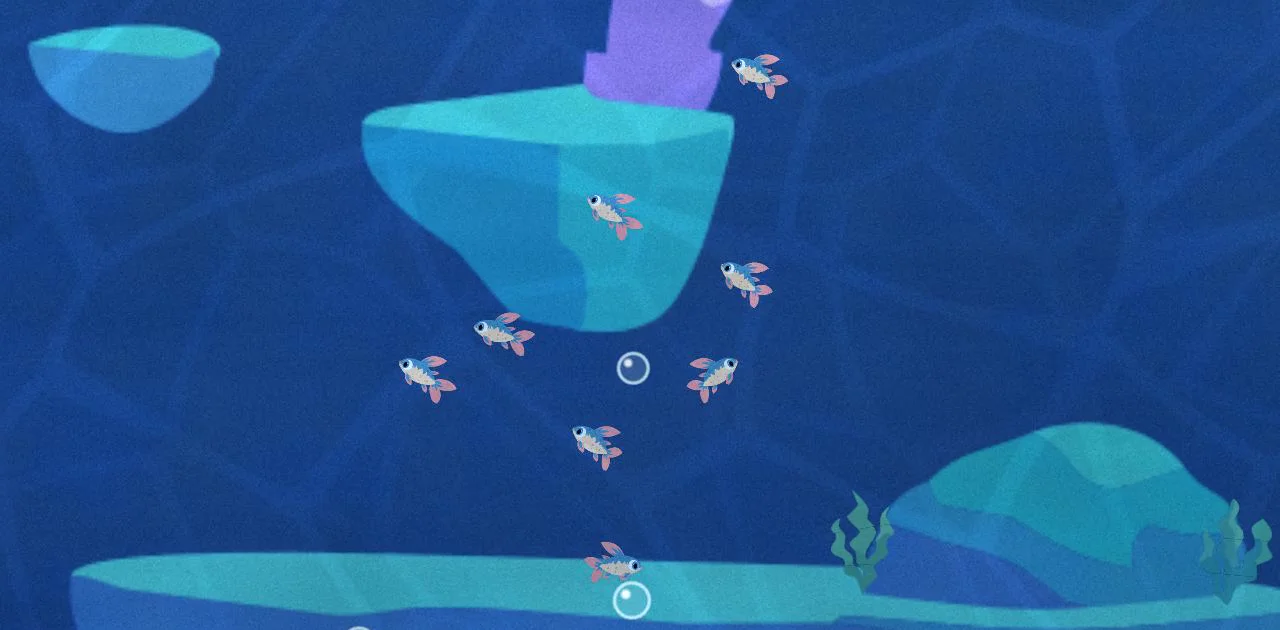 Work in progress · in-game
I spent some time on how they move. Each fish keeps an eye on its nearest neighbours: it keeps a little space from the ones too close, lines up with the ones around it, and stays with the rest. They swim in short pushes and glides rather than at one steady speed, and that’s what makes a school look alive.
They’re wary, too. Get an animal too close and the school darts off, the fright passing from fish to fish, then gathers again once things have calmed down.
Eggs, fry and the end of a life
Fish lay their eggs among the water plants on the bottom. An egg sinks to the lake bed, hatches into a fry, and the fry grows up with its shoal, so a lake keeps itself stocked as long as there’s room in it.
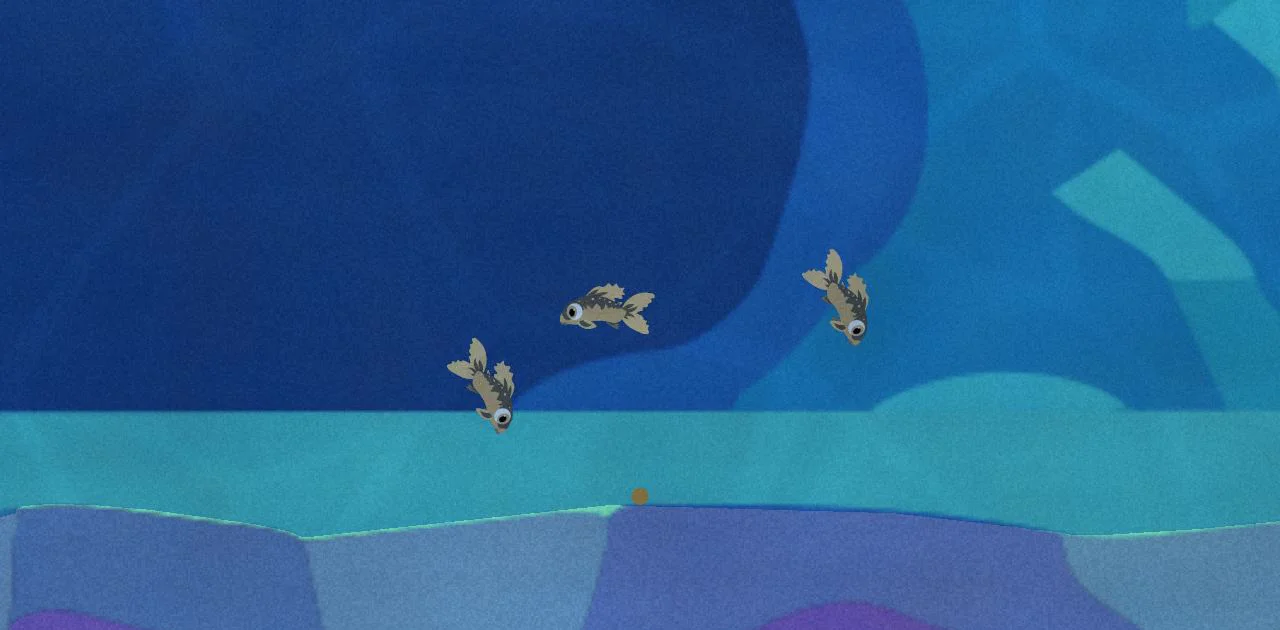 Work in progress · in-game
Fish don’t live forever, and they can’t live out of water. When one dies, it turns belly up and floats up to the surface, stays there a little while, and fades away.
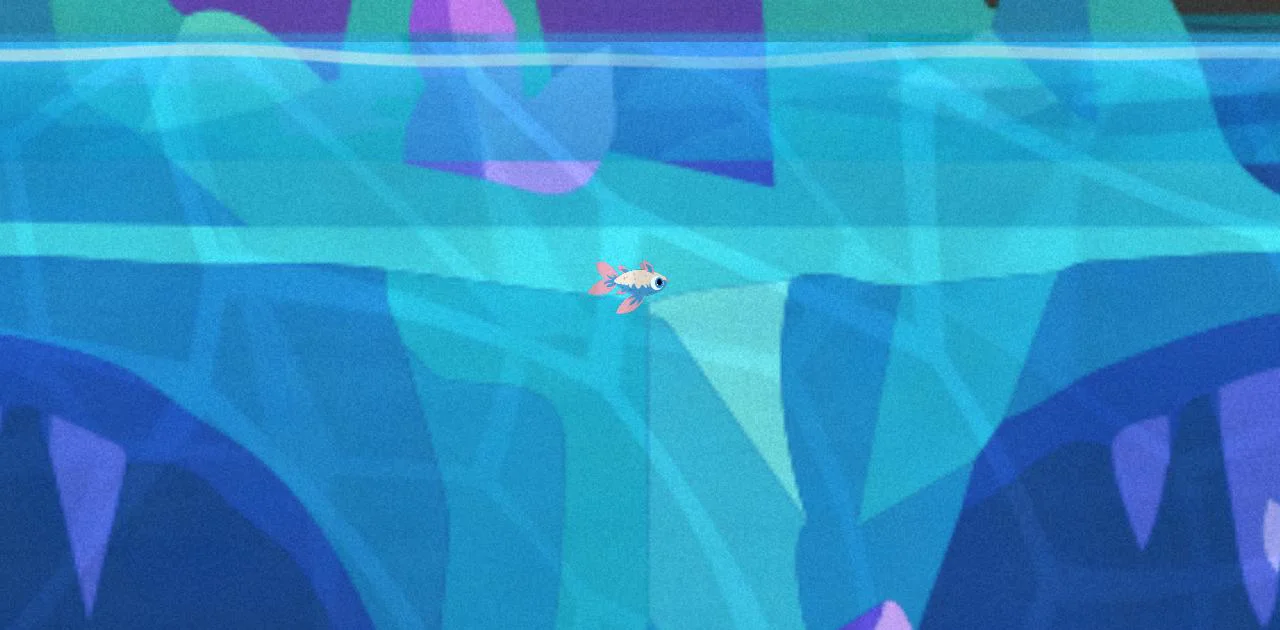 Work in progress · in-game
Nothing eats the fish yet. None of today’s animals live in the water, so they leave them alone.
Made like everything else
Bees, hives and fish aren’t special cases built into the game. Each one is an item with its own script, the same as a flower or a peach tree. That means they’re made, changed and tested in Terra Vitae Studio like anything else, and in time the same will go for critters people make themselves.
As always, all of this is work in progress, and it’ll keep changing as the game grows.


