Another big day. The Glabra (Glabra irata), the second species in Terra Vitae, now walks, runs and leaps through the world.
A new species, fully animated
Like the Pilosa, the Glabra is put together from hand-drawn parts, and its animations are hand-drawn frame by frame. It walks, runs, hops, leaps, eats and sleeps. Males, females and babies each have their own look.
Its colouring comes from its genes, so no two are quite the same, and the young change colour as they grow up.
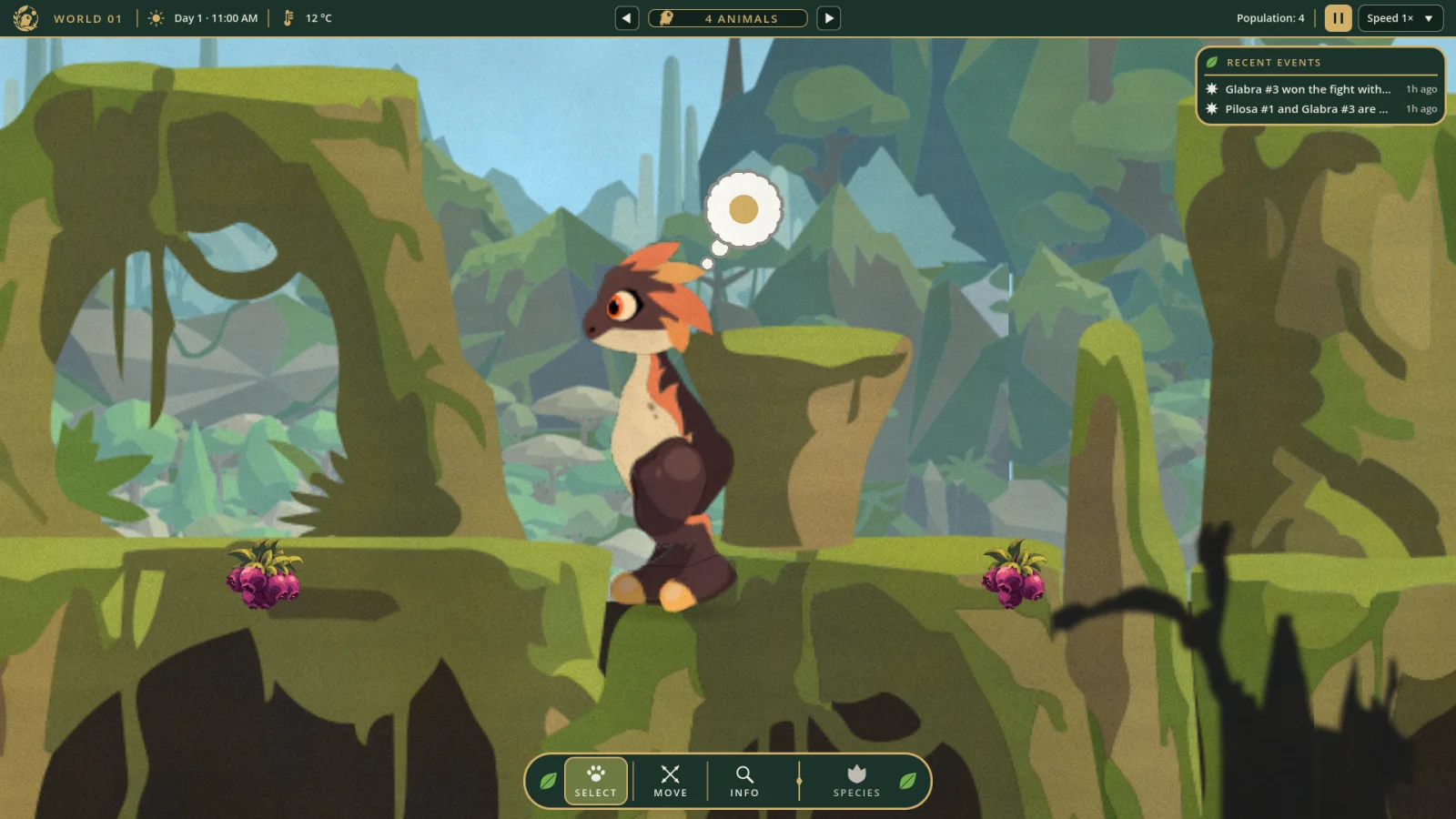 Work in progress · in-game
Looking after themselves
Animals now get hungry and thirsty, and go off to find food and water by themselves. Leave them without either for too long and they won’t make it.
The Glabra has a temper, as the name suggests: irata means angry. One will square up to a rival, and if neither backs down, they fight. The old, the injured and the young are more sensible about it and run away instead.
And each species now knows its own body.
The Pilosa, too
The hunger and thirst aren’t just for the Glabra: the Pilosa look after themselves now as well. Here they are in action.
A world that wraps around
Worlds now join up at the edges. Walk off one side and you come back on the other. Ponds, lava, floors and shade can all stretch across that join and work on both sides of it, and the scenery scrolls smoothly as you cross.
Smaller things
- The selection marker is cleaner, in the new gold style.
- Scientific names are shown properly, in italics.
- A long list of fixes under the hood, so the world and its creatures behave more reliably.
As always, this is a development preview. The art, the animation and the behaviour will all keep changing.


