This update changes two things about how animals eat: how quickly they get hungry again, and what they choose to eat in the first place.
Hungry less often
Animals were getting hungry again far too soon. After a meal, a fed animal had only about a minute before it went looking for food again, which made a world feel like one long lunch.
Hunger now builds up two and a half times more slowly. An average animal takes about four minutes of game time to go from full to completely hungry, where before it took under two. A game day lasts ten minutes, so an animal now needs to eat a couple of times a day rather than a couple of times an hour.
Animals are all a little different, so some will get hungry sooner than others. And one old rule hasn’t changed: an animal that stays completely hungry begins to starve. Its health drains away over about eight minutes, and eating stops it. An animal that runs out of health dies of hunger, whether or not there is any food in the world.
Food comes in groups
Every food in the game belongs to exactly one group. The groups are fruit (the peach, for example), fish, the small animals the Glabra hunts (the ember vole is one), cave insects (the crystalweave spider is one) and, new this week, fungi. The groups are simply the game’s way of telling foods apart, and you never see them on screen.
Every species has its own tastes
Each species has a list of the food groups it will eat, and how much it likes each one. That list belongs to the species and doesn’t change.
Pilosa mostly want fruit, with a little fungi on the side. Glabra mostly hunt small animals, and will take some fruit and fungi if they come across them. The Lubrica lives on fish. No animal will ever go after a food that isn’t on its list, and the game doesn’t show these lists either. You find out what a species eats by watching it.
When an animal gets hungry, it thinks about the foods it knows of, meaning the ones it can see or smell or remembers from before. It picks a food group by chance, leaning towards the ones it likes best, and heads for the nearest food of that kind. If a species doesn’t care for a group at all, it will only eat from it when it is starving. A starving animal stops being choosy and goes for the nearest food it can eat, whatever group it belongs to.
Hunting works the same way wherever the animal can go, on land or in water. The animal chases its prey and snaps at it, and a snap that’s within reach catches about half the time. A catch is eaten at once, and how much it takes off the animal’s hunger depends on what it caught. When a snap misses, the prey gets away in whatever way is natural to it. Eggs are never food.
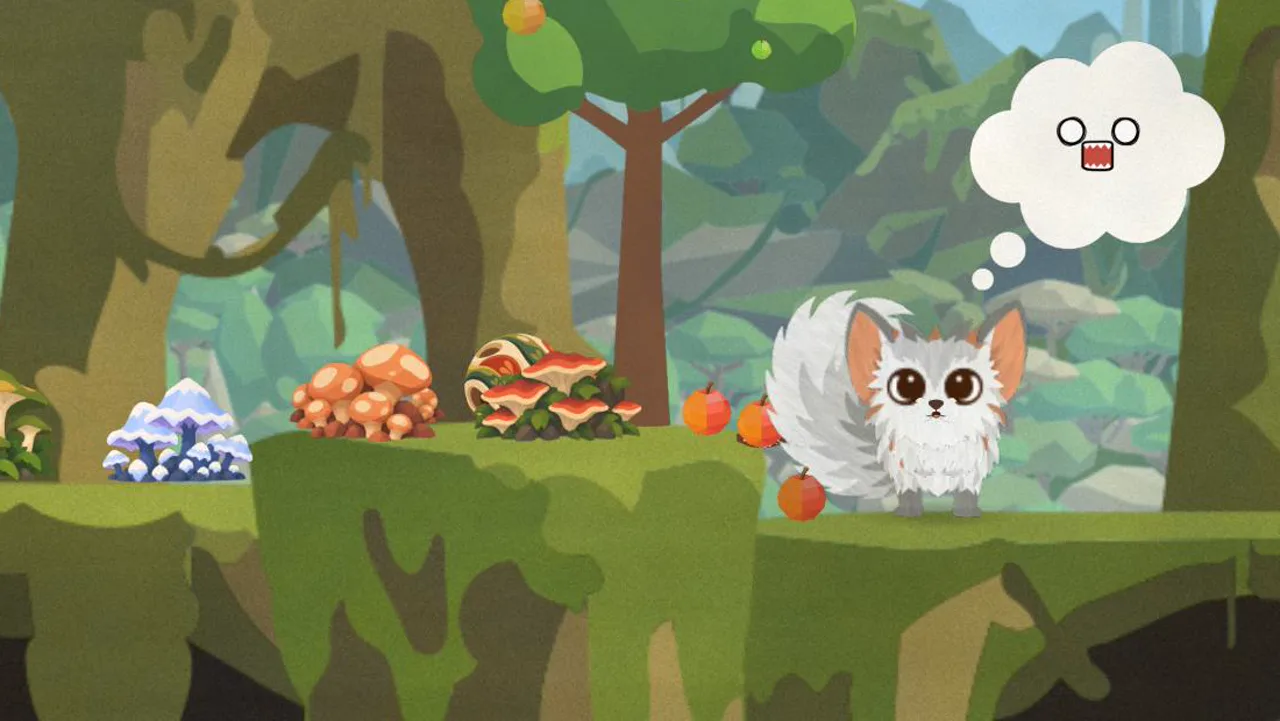 Work in progress · in-game
What this means for a world
A world now needs the right foods for the animals living in it. Pilosa will manage on fruit, but Glabra need small animals to hunt. Fungi grow back after they are eaten, so they make a steady side dish. A spring keeps your animals watered, but only food keeps them fed.


