Every Pilosa you meet in Terra Vitae is built from its genes. Nothing about how it looks is picked at random when it hatches: it comes from its mother and father, with the odd surprise along the way. Here’s how that works.
Two copies of everything
A Pilosa carries two copies of every gene, one from each parent, picked at random from each parent’s pair. How a gene shows depends on its kind, the way it’s thought to work in ball pythons:
- Dominant: one copy is enough for it to show.
- Recessive: it stays hidden until a youngster gets a copy from each parent.
- Codominant: one copy shows partway, two show in full.
Coat colour
Three pigment genes, light, mid and dark, paint every tuft of fur. They’re codominant, so a youngster of a ginger parent and a silver one can land somewhere in between. A new world starts with coats like wild, cream, fawn, cinnamon, ginger, chocolate, black, blue-grey, silver and lilac.
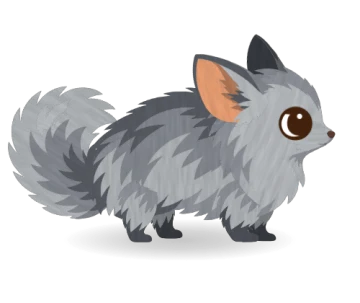 Work in progress · in-game
Markings
White spotting is dominant. It spreads up from the chest, belly and paws as its strength rises, until at full strength the animal is almost all white, with only its eyes and nose unchanged.
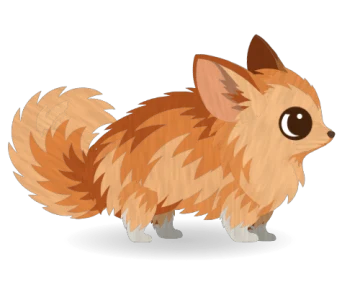 Work in progress · in-game
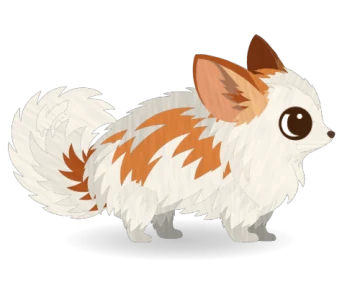 Work in progress · in-game
Points are recessive: they darken the ears, snout, lower legs and tail tip, as on a Siamese cat. Countershading is codominant: lighter below, darker above.
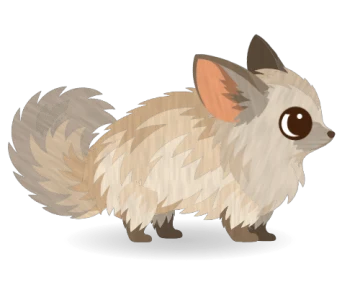 Work in progress · in-game
Shape and size
Nine parts of the body each have a size gene: ears, eyes, snout, head, chest, body, front legs, back legs and tail. Each can run from three quarters of normal to over a third bigger. On top of that, every animal has its own small differences, so two Pilosa with the same genes still don’t look quite alike.
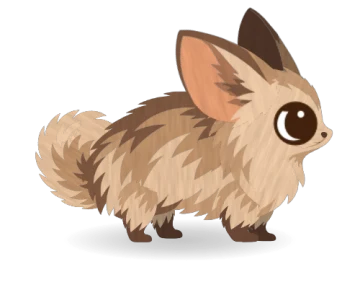 Work in progress · in-game
Mutation
Now and then a gene changes as it’s passed on. It’s rare, and the change is always small. Selective breeding should take generations and generations to get to something that’s very different, like a blue Pilosa with small ears and bigger eyes.
Hidden genes
The first Pilosa in every new world carry hidden recessive genes, different every game. They can sit unseen for generations, until two carriers have young together and something new turns up.
Growing old
Genes don’t only show at birth. Through the last two stages of life, old and ancient, a Pilosa’s colours slowly fade toward a pale grey.
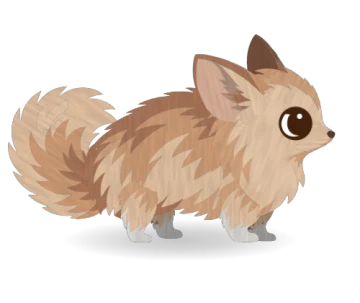 Work in progress · in-game
All of this is work in progress, and the genes will keep growing as the game does.


