The Lubrica (Lubrica occulta) is the third species, and the first that lives entirely in water. It has external gills and feathery fronds around its head and a long, finned tail. Females are pink and males are blue.
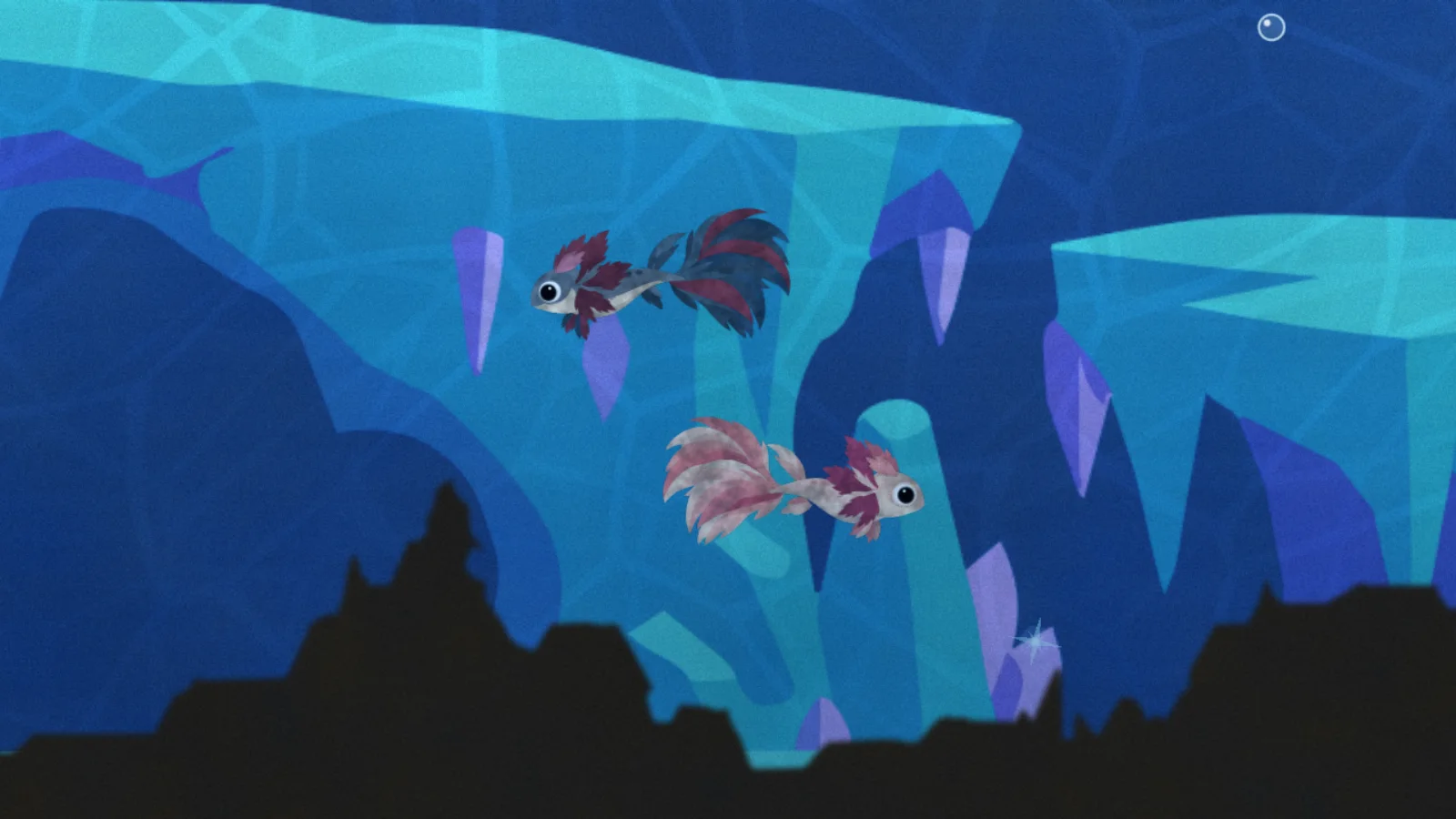 Work in progress · in-game
Life in the water
A Lubrica swims at every depth and rests on the bed on its fins. It never leaves the water, and it can’t survive out of it: if you carry one out and let go on dry land, it dies. Young Lubrica are tadpole-shaped and swim with a bending body. They grow up through the same seven life stages as the other species.
Hunting
The Lubrica is the first animal that eats the fish. A hungry one goes for a fish it can see or smell, and catches it about half the time it snaps. Fish are all it eats, and it leaves their eggs alone. In a lake with no fish it searches and eventually starves.
Courtship and rivals
When a male and a female are ready to breed, they perform a courting dance that lasts about 20 seconds. They meet face to face, level and a little apart, and neither ever flips round or rolls to face the other way. First they circle each other: the one on the left rises, goes over the top, down the far side, upside down along the bottom and back up, while the other, its mirror image, dips under first. They level out one above the other, drift apart and end face to face where they began. Then they come together and each rises into a loop of its own, the two mirror images of each other, belly to belly up the middle, over the top upside down, down the outsides and round underneath. They finish hovering nose to nose.
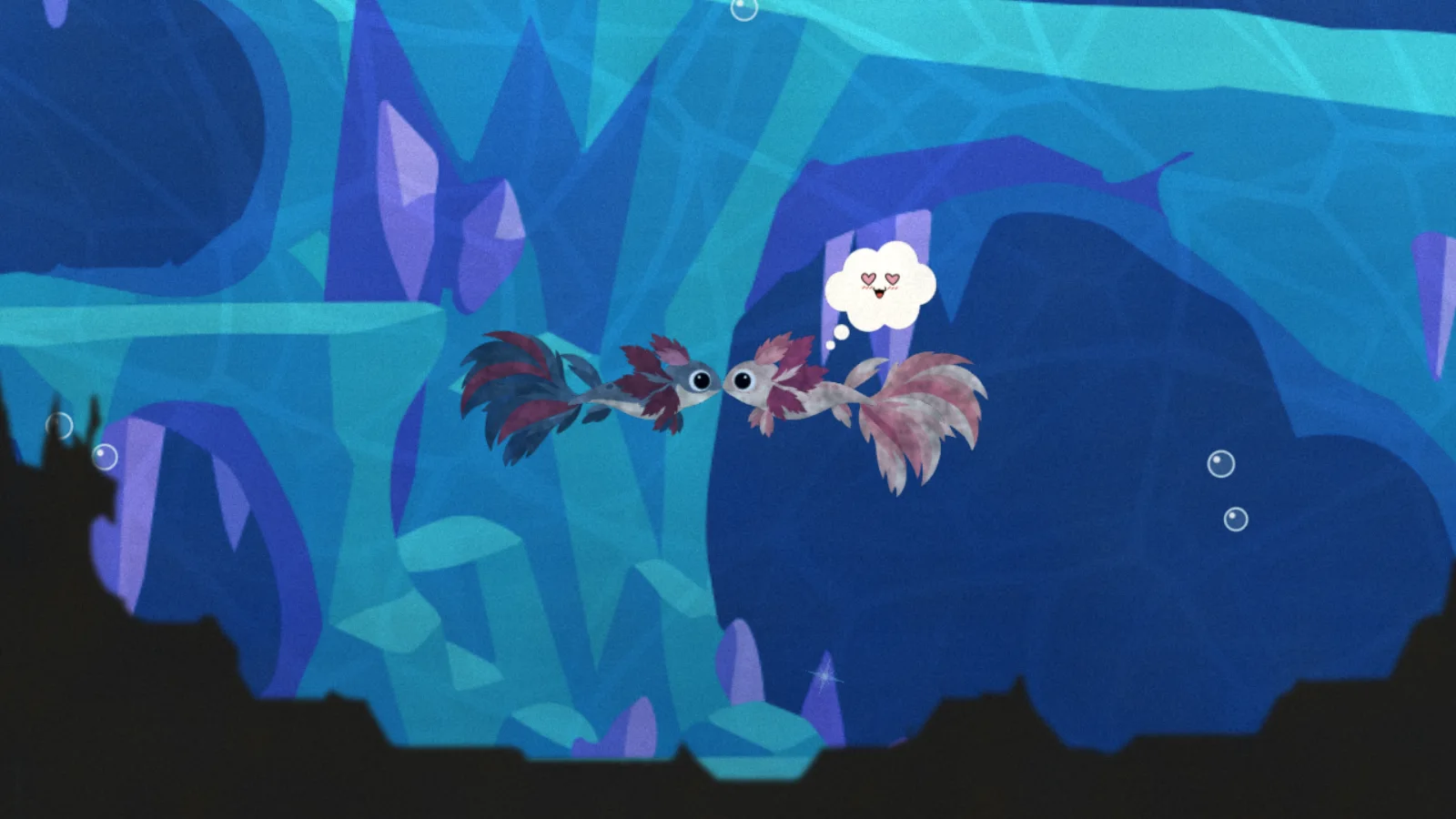 Work in progress · in-game
Males are rivals, but only in the breeding season. When two grown males meet under water they face each other side-on and puff up: fronds flare, crests lift, tail fins fan out and everything shakes. Then the stronger male makes a short charge and the weaker one swims away. Nobody is hurt. The loser keeps away from the winner for about half a minute, and both rest before they can contest again.
The Lubrica’s eggs are distinct, fish-like eggs, very different to the Pilosa’s and the Glabra’s. It’s still in development: more behaviour is on the way, and the Cryptica, the next species, hasn’t arrived yet.


